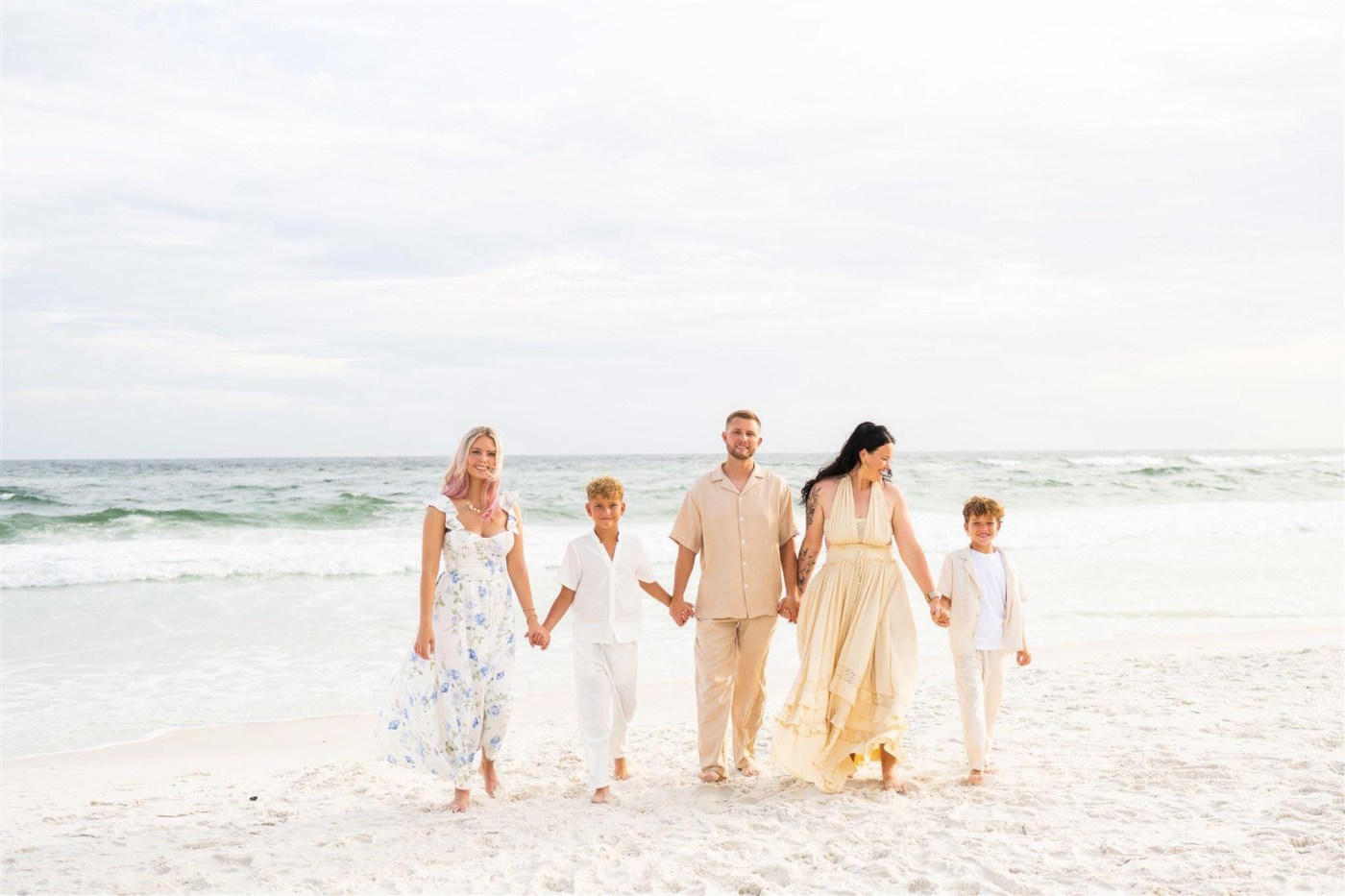
I don’t know if I’m reacting the way a typical mother should. I don’t know what the “typical mother” should react like, feel like, process like. I’m not paralyzed in place. I’m not gnashing my teeth, nor wailing like a banshee. I’m not ready to rip heads off strangers, or the roses in my back yard… or God.
I mean, that would be pretty typical, right? Blasphemous, yes, but typical — to be angry at God, right? And everyone else out there walking around perfectly healthy in His perfect image?
Instead, I’m still going through the motions of my normal life… considering all the things I need to do for the day, the places and practices where the boys need to be, what I should make for dinner… even proceeding with this two-week trip to the UK. Surely that one is blasphemy, right? That’s definitely not how I should be acting is it? That’s not typical…
But then, what is typical anyway?
Because my daughter surely isn’t the typical patient for this disease. This clear cell renal carcinoma that appears to have spread to her liver. As in Stage 4.
That diagnosis is typical of an older person… and a male. Bethany is neither old nor a man. She is a thirty-five-years-young mother of three, who was 33 when she first learned she had a tumor on her right kidney. Thirty-three when she had her partial nephrectomy. If they’d taken her whole kidney, would it have made a difference? Is that typically what’s done?
No, none of this feels typical. So maybe my reactions don’t need to be either?
Besides, we still don’t know for sure that’s what we’re dealing with. Although our family’s margin for error is much slimmer than for most. A typical patient’s family would only know that an MRI has been recommended to supply additional detailed imaging at this stage. (This stage. The irony of that phrase is not lost on me.) But we have our own staff of surgical oncologists as kith and kin.
So while a typical patient’s family would have only been notified of the suspicious lesions on the CT scan, our patient’s surgical oncologist sister immediately asks for a cd of the scan, watches it remotely, knows what she sees, shows the images to her most-trusted radiologist and fellow oncology colleagues, along with every other physician friend she trusts and loves from all over the United States, (because it’s her sister, after all, and she really, really wants to have been wrong), and they all agree the lesions are characteristic of metastasis from renal cell… so much so that the sister-surgical-oncologist immediately has her sister’s treatment moved to the University of Miami where she practices and where her surg/onc partner is installed as caregiver, who then immediately orders a chest CT to make sure there are no additional mets in the lungs, along with a referral to an interventional radiologist for an immediate biopsy, as well as a timeline for immunotherapy and eventual (hopeful) liver resection.
No, a typical patient’s family doesn’t have all these experts and referrals and scans and biopsies and treatments fast-tracked to near hyper-speed. Most patients don’t have that privilege.
I understand how privileged we are. I am grateful. So grateful.
But I’m also here to say it doesn’t feel like privilege. It feels like awfully bad fortune. My daughter faces a terrifying fight. And while the storm howls all around us, I’m doing my best to focus on the tasks at hand. The rehearsals and practices, the dinners and laundry, flights and itineraries. Doing my best to move forward.
Because there is a slight, oh-so-slight chance, that the spots are perfusion abnormalities. That the contrast pooled. Or that they are solid, but not malignant: hepatic adenoma, hemangioma, or follicular nodular hyperplasia… all benign.
And even though 10 out of 10 experts believe that’s most likely not the case, we are praying for and believing in a miracle.
Most patients and their mothers would do the same. At least on that, I’m pretty certain we’re typical.
Miracles aren’t typical. That’s the nature of miracles. If they were, they wouldn’t be miracles. They would be ordinary occurences. As in, typical. But my daughter, her diagnosis, the whole situation, isn’t typical.