Search

postmodernfamilyblog

Multigenerational Mom Muses on Twin Toddlers & Twenty-Something Daughters

Category

teaching teens

Teaching English Composition: The Delicate and Demanding Job of a Voice Midwife

On dark days, I wonder why I blog.  Why I put myself through the peeling back of layer after layer of tender, hidden embryonic self-truths, exposing the fresh new bits to a cold, fickle world…

And no matter how much I tell myself it doesn’t matter whether my musings are acknowledged and well-received, it does. It matters a lot. Because everyone wants to be heard. Everyone wants to feel valued and validated. And when it doesn’t happen, it brings on floods of insecurities and self-doubt. Especially after the painful process of self-revelation.

It makes me question why I blog about my life at all? What do I have of value to offer up to the world? I’m not young and good looking. I’m not rich and famous. I’m no makeup expert or flashy fashionista. And I’m certainly not a ninety-something grandma in tie dye lingerie smoking weed and dancing the Charleston to gangsta rap. So why do I even think I can compete in this world of crazy gimmicks and material world wisdom? What the hell do I think I’m doing, blogging about my stuff — my boring, middle-aged mother stuff, the stomach bugs and family vacays and potty-training-woe-is-me stuff.

And hitting these dark, despondent days of doubt – these total eclipses of confidence, if you will — makes me consider my students. Because my paying job is teaching high schoolers to find and use their voices through literature and composition – and I take my job very seriously. And they despise me for it – particularly the composition part. They act like I’m tearing out their fingernails with a pair of needle-nose pliers, followed by a chaser of hydrochloric acid.

If you want to know what the shrieks belched out from the bowels of hell sound like, step into my classroom the morning I announce an essay assignment. Lord, the bellyaching.

And I get it. I honestly do. If it’s done right, writing’s a painful process. I’ve felt the needle-nose pliers and hydrochloric acid many times. But it’s also enlightening (which is precisely why it’s so painful) for both the writer and the reader. The more you write, the more you know – not about the world (though that happens too) – but about yourself. Who you are. What makes you tick and why. All sorts of unacknowledged truths claw their way to the surface when you write. It’s like you’re giving birth to yourself. So of course, that’s gonna hurt. Like, a lot.

But pain is this generation’s enemy. They run from it. They prefer high GPAs with minimal effort and zero pain. And I’ve discovered that quite often, that’s what gets served up. They hold out their tray, they get their perfect little A.

(I once had an AP student brag to me that in an honors English class she never once turned in a weekly journal assignment — what should have totaled 16 zeros on her report card — yet she still walked away with a 100 in the class. And naturally she adored that teacher. Why wouldn’t she? An easy A equals a happy student, happy parents, and therein, happy teacher.)

And this scenario is not that uncommon, folks. Teachers are not making their students write. Why? No pain — and pain-free seems to be the way of the world right now. Consider all the scheduled C-sections with full makeup and perfectly coiffed hair. (I know, I know… there are necessary c sections, I’m not saying there aren’t – I had one with the boys this last time around, but so many are simply the easy way out…)

But I’m here to tell you there are no scheduled c sections in my English class. My students are going to birth their ideas one painful quote incorporation at a time. But I promise you, when it’s over and done, it will be worth it. Birthing a voice is a beautiful thing. A beautiful, gut-wrenching thing.

But when we as teachers don’t require our students to go through that painful birthing process – or if we do, but then we don’t acknowledge that fledgling voice with commentary, both critical and complimentary — then we are teaching them that their voices don’t matter.

And we are teaching them that they can do absolutely nothing and succeed at life.

And neither of these is true. And I honestly don’t know which lie is worse, but as a person who’s been denied a voice when I was exactly their age, I tend to think it’s the first. Voice matters, people.

Like I said, I know what it feels like to believe my voice doesn’t matter — to feel pointless and small and ready to quit. To feel powerless.

But I don’t quit when I start feeling small and weak and ineffective because I have enough willpower and confidence, and I have enough love of self and craft to overcome the doubt. I have age and wisdom on my side, brought about by teachers and loved ones who believed in me.

But our students seemingly have none of these.

Our job as educators is to empower. By not having students write — or by requiring they do and then not grading their work — we teachers are failing our students. If the essays aren’t being evaluated and validated – if they are not receiving written commentary, if the students themselves are not getting the time and attention and INSTRUCTION they so deserve (and so many are NOT), then what exactly are we teachers teaching them?

We are teaching our students that they are not worthy of confidence and self-respect and a future. And the saddest part about this situation to me is that our students are okay with that. Because it is easier.

Writing papers is hard work. Grading papers is hard work. Taking a student from point A to point Z in a semester is hard work. But guess what? Education and educating SHOULD both be hard work. It’s a job. So we need to do the hard thing to the best of our abilities. All of us. Teachers and students alike.

This year, due to unique and unavoidable circumstances, I face a teaching schedule unlike any I’ve ever held before. I am teaching two separate courses (nothing new there), with two high stakes exams tied to each course at semester end (that’s the big stressor, here).

I am a bit overwhelmed, to say the least. It would be really easy for me to say that there is just way too much grading involved and way too many students to accommodate. That this is only a temporary schedule, so I’m simply going to coast my way through it all. I’m just going to give it a lick and a promise, keep the parents off my back, keep the kids happy with completion grades, and chalk it all up to doing the best I can under the circumstances.

But I would be doing myself and my students a disservice. And I’m not ok with that.

Because while these kids would be happy with their easy As — and all the accolades and scholarships and privileges that come along with them — that sort of teaching philosophy also gives them little to no true skill sets, no true self-respect, and no true future. And I refuse to do that. To them or to me.

I have an incredibly tough year ahead of me. And so do my students. Because they will write. And I will grade that writing. That’s my job as an educator: I am a voice midwife. I coax, cajole, demand, deliver. They are birthing their voices, their identities. It’s not easy. But nothing worthwhile ever is. And they and their voices are worthwhile.

So pardon me while I pick myself up by my ballpoints and crank out some commentary on the pile of newborn essays just screaming for some attention.



Choice Cuts in Education: Discrimination is Alive and Well in the State of Georgia

In the state of Georgia, discrimination is alive and well and driving our school systems. And it’s not what you think.  Schools don’t discriminate against students based upon race, creed, color, economic status, or national origin. But they do, however, quite openly discriminate based upon course load.

You see, Friday afternoon, I opened an email from the State Department of Education and what I read blew my mind and hurt my Humanities heart. I am outraged and appalled.

The email states, and I quote, “In the past, funding has been provided by the legislature Tfor one AP exam for all low-income students enrolled in Georgia public schools.  Recent legislation redirected this funding to support only STEM related AP exams for all students regardless of economic status.  Hopefully, this notice will provide time for you and your administrators to explore other funding sources to support your non-STEM, low-income AP student exams.”

Wait, what?  “Recent legislation redirected […] funding to support only STEM related AP exams[…] regardless of economic status?” Excuse me?

I had to read the email twice. And then I had to seek confirmation from my principal to make sure I was indeed seeing what I was pretty damn certain I was seeing? Because it seemed impossible. Impossible to believe that our state would take away funding from our worthiest and neediest students. Students who have been diligently bettering themselves, year after year, through education. Students who have been climbing their way out of the darkness of poverty by taking challenging AP classes (and yes, many of these students take STEM classes, but not all) just to have the final rung on their ladder toward success removed: the ability to test, receive college credit, and get out of the vicious cycle.

And just what is so special about STEM anyway, that it supersedes all other course work? STEM — that educational juggernaut that harnesses the four horsemen of accomplishment: Science, Technology, Engineering & Mathematics. Those subject areas that in recent years equate to the Holy Grail of education, warranting such teacher and student incentives as signing bonuses, higher salaries, excess funding, partnerships, scholarships and now, apparently, AP exam exemption status.

Believe it or not, high levels of rigor exist outside STEM classrooms, ladies and gentlemen: critical thinking skills, advanced problem solving, the ability to gather and evaluate evidence, interpret and apply that evidence. These skills occur in other subject areas, too.

Yes, STEM is vital. I get it. It drives innovation and industry and helps keep the United States at the top of the global leaders. But STEM is not the only thing that keeps us there.

The Humanities and the Arts teach us what it means to be global citizens. Courses in history, literature, music, philosophy, language, rhetoric, and art provide instruction in civility, altruism, ethics, reflection, adaptability, etc. They strengthen our ability to communicate – with ourselves and with other nations. They keep us balanced. Without these valuable tools, we quite likely would become a nation fueled by xenophobia and driven entirely by rationality.

And what could possibly be wrong with a nation that looks out for its own best interest, driven entirely by the bottom line, you ask? A lot.

Read Jonathan Swift and you’ll find some answers. He warned us over and over of the harm that can befall mankind if we only use the rational parts of our brains.  Read “A Modest Proposal,” where he pens a brilliant, satiric remedy for an over-populated Ireland by suggesting the Irish Catholics breed children (something they are already so naturally good at) for the soup pot and barbecue joint and monetary gain. Completely rational and cost-effective, mind you.

Read Gulliver’s Travels. Within its pages, there are multiple accounts of societies driven by — and completely destroyed by – the pursuit of science and technology and ice-cold rationality.

Read: it’s fundamental — and as a humanities course, it’s a dying skill.

Not all of us are STEM people, nor should we be.

And I’m not a STEM hater. Far from it. Some of my best friends are STEM people. So is my daddy. Hell, so is my daughter. But I’m here to tell you we need balance. Humanities and the Arts deserve a place at the table too, folks.

And, to bring it all back to Advanced Placement, where my argument began, our state legislature and DOE have taken Humanities and the Arts off the table for our economically disadvantaged students. They will be force-fed STEM or they will not eat. And that is wrong.

These exams are not cheap ($93 each), and while there are reduced costs in place for students who qualify through the Free and Reduced Lunch program, the biggest incentive – one free exam for each economically disadvantaged student testing – is no longer available thanks to our state’s new STEM reallocation.

I’m sorry, but STEM is not the Be-All and End-All of education. It should not be funded at the expense of other disciplines. Nor at the expense of our economically disadvantaged students.


Call Me Crazy, Just Don’t Call me a Crazy Bitch: Why I Teach Feminism

A dear friend of mine just brought to my attention a scholarly article called, Hysteria, Witches, and The Wandering Uterus: A Brief History: or, Why I Teach ‘The Yellow Wallpaper,’ by Terri Kapsalis, a professor at the School of Art Institute of Chicago. Among other things, Kapsalis discusses the Victorian diagnosis of hysteria – or the belief in a “wandering uterus” being the cause for basically any, and all, female physical ailments. If a patient was full of phlegm, or suffering from depression, or had a migraine — no matter what the issue — it was surmised that her wild and wanton womb had been creeping around where it didn’t belong again. Not kidding here.

And what, pray tell, was the reason it wandered? Why, it was hankering for a heaping helping of man juice, of course.

Of course. The God-designed purpose of the uterus. To receive man-seed and bring forth life. The only sure way to cure a “hysterical” woman was to keep her barefoot and pregnant. Jizz a day keeps the doctor away.

Such beliefs and diagnoses invalidated legitimate medical complaints of women from Ancient Egypt all the way up to the modern era. Everything was chalked up to hormones. And while diagnostic medicine has moved away from such ridiculous notions, public opinions about the psychological state of womanhood has not.

When we women get too big for our proverbial britches, when we become too intellectual, too political, too competitive, too driven, when we dare to do something beyond the roles society has deemed appropriate for our “kind” – you know, wives, mothers, maybe teachers or nurses – then we are seen as a threat. We are dangerous. So we are called deranged, out of control, hysterical.

And we are slammed right back into that whole wandering womb pigeon hole again. Obviously, we need to sip some more from that whole cult of domesticity Kool Aid again to get us back to our proper place – back on the path of the straight and narrow.

Look at Hillary Clinton, Nancy Pelosi, even Kellyanne Conway and Sarah Palin. They’ve all been called crazy bitches. Hysterical females. Because, as the article so wisely notes, “hysteria is a bipartisan weapon.” A powerful woman is a dangerous woman, no matter the party. I, myself, have been guilty of labeling a couple of these women with the same blasphemous insults that have been used against my favorites. It’s an easy trap to fall into. And every time I trip up, I empower the status quo.

And the status quo is white and male and always eager to see women fail. Sexism is a bullshit topic, according to them. Made up. And feminism is a dirty word.That’s definitely the mentality in certain branches of my family. And in certain corners of my classroom.

Not with AP students, at least not most of them. Most of them love to explore social and political movements. They find counter culture stimulating. They yearn for wider understanding than simply their daddy’s dictums, their pastor’s politics or their Uncle Johns’ world views. They long to balance and counterbalance their minds. To glean understanding from all walks of life. To broaden their understanding and to embrace empathy. They want to absorb, not only with their minds, but with their hearts and souls, too.

But in my general education classrooms, feminism receives eye-rolls. Books with female heroines get groans and barely touched assignments. We don’t want to read a book about a girl, they say. Sexism is imagined, they say. Glass ceilings are made up. Rape statistics are exaggerated. Sexual discrimination is the hashtag of the moment.

And as a teacher, I ask myself how in the world can I change such mindsets? Such opinions? Such blatant denials and refusals? Is it even possible to help someone overcome a prejudice they don’t believe exists? How do you help someone see when they refuse to open their eyes?

Now usually it is the white males in my classroom who refuse to explore the possibilities of inequality — of any kind, but especially sexism. But sometimes it’s the females, too. And that blows my mind even more.

But then, it also gives me hope. Hope that maybe these young women don’t understand that discrimination exists because maybe for them, it hasn’t. Because their fathers and grandfathers and churches haven’t preached weakness in women the way I had it preached to me. They didn’t grow up the way I did. And that gives me so much hope. Hope that the times, they are a changing.

But most of the young women in my classroom, they get it. They know the discrimination. Because they’ve seen it with their own eyes and they’ve felt it in their own skin – not necessarily in terms of business and politics, not yet. They are still young. But when we talk about their bodies, about body shaming and slut shaming and the shame that comes with sexual assault – the floodgates are opened. These girls have seen this. They know this.

And I know without a doubt that every single time I bring up that infamous 1-in-4 statistic, that someone in my class has been there. Odds are more than one someone in my class. These numbers, sadly, don’t lie. And as teenage girls soon to go off to college or careers or military service, my students are squarely in the demographic most at risk. They could become – or already have been – part of that statistic.

I know because I have received private notes from students who were victimized by family members, or by neighbors, or by so-called friends, or even by teachers. I have had students stay after class to say it aloud for the very first time. I have had students bravely tell their stories in class to everyone present. As a teacher, I have read about incidents of sexual abuse. I have heard about incidents of sexual abuse. And I have reported incidents of sexual abuse.

So, yes, even though the topic of feminism gets eye rolls and zeros in the grade book from students who refuse to learn about or acknowledge that sexism exists, I will continue to broach the subject. I will continue to present and discuss literature like “The Yellow Wallpaper” and The Handmaid’s Tale. I will continue to wander off the path of the straight and white and narrow-minded. I do it because of those students who have been touched by sexism. And for those students who deny it exists. I do it for them, too. Call me crazy, but I believe I am helping empower women and eradicate sexism one book, one student, one semester at a time.

So go ahead, call me crazy. But don’t you dare call me a crazy bitch.


Surely Some Revelation is at Hand: Why We Should Read Dark & Twisty Literature

“Reading is stupid!…I never read books!…Nobody reads books anymore… I haven’t read a book since first grade.”

Kids say these hurtful things in English class every semester. It breaks my heart. And it’s hard for me to convince my students that reading really is a worthy pursuit. They are a generation of movies and music, not books and poetry. They watch and listen; they do not read and write They don’t believe in the power of the written word  – unless the word is in a text or tweet. Then it can be powerful. But by golly, it better be quick — 140 characters or less. Our kids take pride in being fast and ignorant.

And so does the president of these not-so-United States (less than half of our population elected him, after all). He once bragged in an interview with Meghan Kelly that he doesn’t read, he only scans “passages… areas, chapters, [because he doesn’t] have the time” to read an entire book or article.

And to be perfectly fair, our fearsome (not to be confused with fearless) leader may be averse to reading, but he is not averse to words in general. He says about himself, “I’m highly educated. I know words. I have the best words. I have the best, but there is no better word than stupid. Right?” And when he’s talking about himself, I tend to agree.

Now some of you would argue that the president wouldn’t have time to read – that he is telling the truth, for once. That as the world’s arguably most powerful tantrum-thrower (could be North Korea’s Kim Jong Un), he very likely doesn’t have time to read. Hell, with all that tweeting, he doesn’t even have time for intelligence briefings. And, the presidency is a big job. Huge. Tremendous (to use a couple of his favorite words). And that is true. But both President Obama and President George W Bush held the exact same job and were still avid readers. Obama used to publish his summer reading list and W. would participate in friendly, annual reading competitions.

It infuriates me that Trump’s got legions of impressionable young minds idolizing his idiocy and his twitter rants. I know this is so because I hear them sing his praises in my tenth lit classroom every day.  (In my AP classroom, however, I’m proud to report the exact opposite :))

So how do I counter that kind of attitude? Because, honestly, why SHOULD we read? What’s the point? How do I put into words the importance of putting words into stories or poems? Why does reading – particularly literature — matter at all?

Now some of us read for escape. And that’s not necessarily a bad thing. Sometimes a beach read or a rom-com can be so-very-good for the weary soul. But that’s not the type of literature I teach, nor the type of answer I need to give my students. Because the books I teach aren’t designed for vacations or hammocks. They’re not page-turners or bodice-rippers. They’re temporal, occipital, and parietal lobe-slappers. They rattle you to the core and shake things up a bit. A lot, even. These books demand attention. They demand a lifestyle audit, a reevaluation of tenet and truth. It is literature designed to promote participation in life. It is literature written to educate, to motivate, to activate. It doesn’t form readers’ opinions, it informs their opinions. No, the literature I teach is not escapism. It is activism.

Good literature models life – the good, the bad, and the ugly. Most often, the ugly. My AP Lit kids – and my kid sister, too — always ask me why we read such dark and twisty stuff. Why all the hearts of darkness and the second comings and killings of mockingbirds, all the Conrads and Yeats and Lees of the literary world?  And I say because they model all the dark, twisty turns that hopefully (with wise choices and some divine intervention) they won’t have to go through. But if they do meet the dark and twisty side of life, that they can better ride out the storm — or even battle and defeat it.

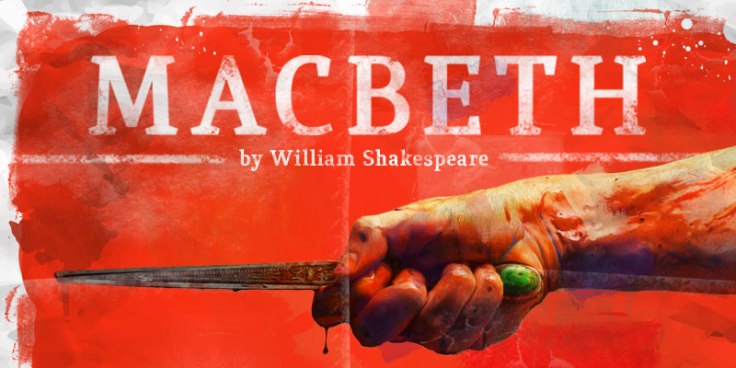
macbethbanner

That’s why we read Shakespeare’s Macbeth. Because after reading Macbeth, we are far better able to recognize a tyrant when we see and hear one. Perhaps if enough Americans had read the Scottish Play in high school, we wouldn’t now have MacTrump in the White House. And those of us who have read Shakespeare’s most unappealing tragic hero, are now confidently and not-so-patiently waiting for the rest of his thanes to fly from him (they’ve dropping like flies this week), and we’re waiting for the Woods to come to Dunsinane, (or should I say DUNCEinane), and we’re waiting for a Man not of Woman Born (translation, C-section babe) to purge our nation of this tyrant and restore it to sound and pristine health. (And there are certainly a whole lot more likely candidates than merely MacDuff these days, as C-sections have been on the rise in recent centuries.)

And that’s also why we read Atwood’s The Handmaid’s Tale — a cautionary tale against what can happen if faith becomes entangled with politics. If morality dictates law. If women’s rights are threatened and then eradicated. And while it may feel like our nation is a far cry from the control and manipulation of women and their identities and bodies (and a world undone by environmental degradation and pollution) that we see in HT, I am here to say we are not. Since Trump has been in office, the widespread access to contraception, legalization of abortion, and growing female political influence have all fallen under attack. As has the Environmental Protection Agency and the National Parks Service. If these attacks are successful, if our rights begin to topple, then the return to traditional gender roles and subjugation of women cannot be far behind. Nor can widespread environmental disaster. Atwood’s prophetic work reflects the ugly truths of our time. By its very nature, it’s designed to frighten, to warn, and to demand action. It reflects social and political tendencies and demonstrates the horrors that could – let’s say WILL — occur if Trump’s power is allowed to reign unchecked.

And that’s also why we read The Kite Runner – a coming-of-age story about two young boys struggling to belong and to be strong amid crumbling relationships and a crumbling homeland. And it just so happens the story revolves around two Muslim schoolboys in Kabul. But it could just as easily be between two white boys is Atlanta, or two Asian girls in Singapore, or two Latinas in Los Angeles, or two German frauleins in Dieseldorff.  The point is, we read this novel to know that we are all fundamentally the same. We all need love and understanding, connection and communion, forgiveness and redemption.  This book demonstrates the universality of the human experience. And right now, more than ever, we need to remember humanity.

Yes, the literature I teach is tough. And it’s tender. And it’s smart and searing and aggressive and wise and passionate and compassionate. It’s all of those things. It has to be. It needs to be. And so do our citizens. Not just America’s, but the world’s. We all have to be tougher and smarter than what we’ve been thus far. Because there’s a rough beast in our White House and he’s got a cold, corrupt soul and a gaze blank and pitiless as the sun. And twenty centuries of stony sleep have birthed our worst nightmare.

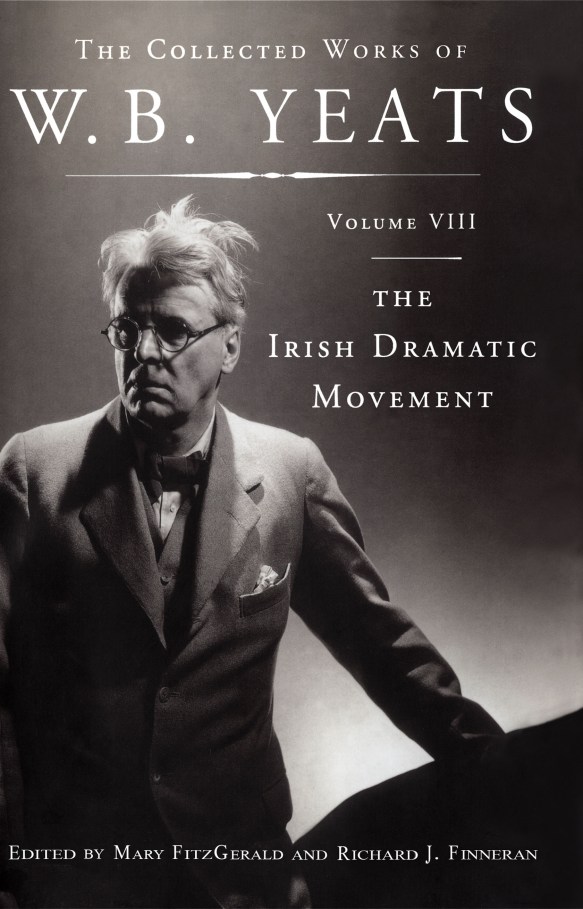
If Yeats were alive today, the beast slouching toward Bethlehem would be orange and have a comb-over.

(I borrowed heavily from the prophetic poem of the masterful W.B. Yeats this week. Read him. He tingles your spine and torments your soul.)

yeats

#SoulfoodSeoulfood

Our dishwasher has the longest cycle of any machine I’ve ever encountered. An elephant’s menstrual cycle is only slightly longer. It runs for 2 hours and 83 minutes.(The dishwasher, not the elephant.) Not kidding here. It seems unheard of. I’ve never been around one as dedicated and hard working. What makes this so incredibly irritating is that we can’t run the dishwasher unless the boys are asleep or absentee because they like to push buttons. All buttons. The ice and water buttons on the fridge (we had to put it on lock-down mode– I didn’t even know a fridge had such a thing!), the buttons on the oven, the buttons on the remote control, the buttons on their parents (every damn day), the buttons on their parents’ cell phones… the list goes on and on. You name it, they push it. So if we run the dishwasher while they’re awake, inevitably it gets stopped somewhere, mid-cycle. And they’re so stealthy about it that we never see or hear them do it.

We’ve tried for four days to run our dishwasher. Four. But, sadly, because we are the parents of twins who have decided that sleeping is overrated and shouldn’t necessarily be applicable to them  – well one twin in particular these days — we continuously forget to run said dish washer because our minds are M.I.A. So we currently have no dishes in our cabinets. None. Every dinner, salad, and dessert plate – even every coffee saucer (because we ate breakfast off of those this morning) — is dirty and festering in its own detritus waiting for us to run the load. And we just can’t seem to manage it.

Which makes the task at hand – preparing our New Year’s Day feast – rather difficult. I’ve been closely examining the contents of the dishwasher – sniffing glasses and squinting at fork tines – to determine whether or not I need to take forensic countermeasures with a brillo pad and hot water. I decided it was easier to just pull out the Vodka and pour myself a drink and let the alcohol kill the germs. Besides, I hadn’t properly rung in the New Year yet. Mike and I fell asleep last night before 10:30. Tate and his propensity for middle-of-the-night wake-up calls are beginning to take their toll.

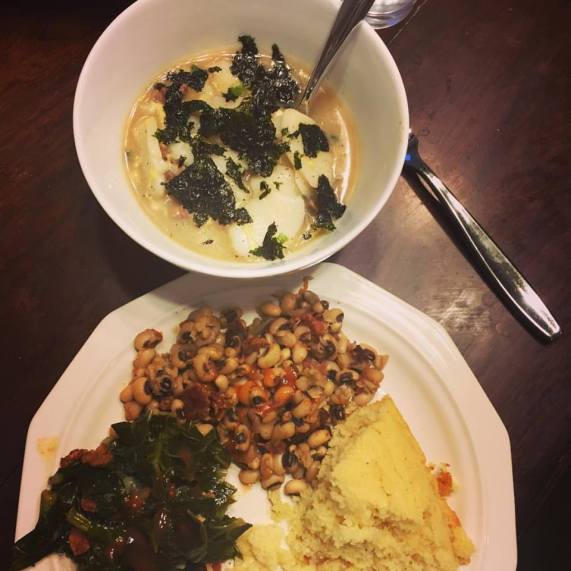
But let’s talk about New Year’s Day in the South. It’s a beautiful conglomeration of country fare: black-eyed peas and collard greens, buttermilk cornbread and sweet tea. And I do it all. Well, except for the sweet tea. I told you already, I’m not a tea-totaler 😉 And I may be Southern, but I’m not Southern Baptist. So I threw back a couple of vodka tonics while I cranked up my veggies because I like my potatoes fermented. Not mashed. And not fried.

But it’s not all peas and greens and potato juice at our table on New Year’s Day. Remember, we’re a mixed marriage, so we’ve got ourselves a mixed menu.  Mike contributes his cultural heritage, too.  He makes his family’s duk guk. It sounds incredibly wrong — like something feculent at the bottom of a millpond. But it tastes incredibly right — like seventh heaven in a soup bowl, complete with seaweed and rice cakes. It’s my second-favorite thing my husband does for me… but I digress.

seoulfood

Now the boys won’t eat any of the above-mentioned goodness. And it’s not that they are the kind of kids who will only eat chicken nuggets and French fries (although they love those too.) They’ve been raised on multicultural menus their entire two-and-a-half years on this planet. Their favorite foods are Korean curry and chicken n dumplings. Sadly, though, they draw the line on vegetables of almost any variety, so beans and greens are entirely out of the question. And it saddens me, but while my mom and Mike and I feasted on soul food and Seoul food, the boys feasted on Cheez-its and the bacon reserved for crumbling atop the collards. Oh, and some random bites of cornbread. If tonight’s any indicator, I won’t be winning any mother of the year awards in 2017.

But I am winning. Even when I fail.

Even when the boys have minor (and major) meltdowns in Aisle 3 of the new Kroger — and then again in Aisles 8 and 12. (Which happened today while we were shopping for our duk guk and greens, by the way.) Even then, I am still winning. Because I have been given the opportunity to mother four exquisite, perfectly imperfect children who show me the secrets of the universe every single time that they smile. They bring me a joy that cannot be described nor contained.

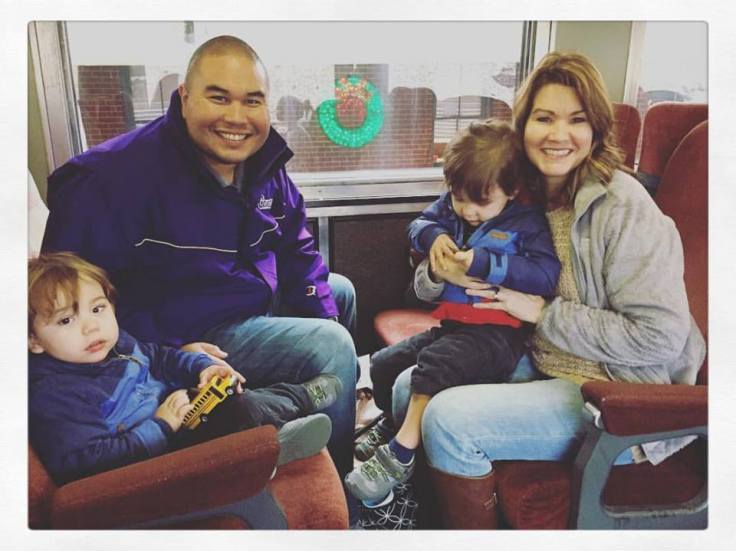
So, yes, I am winning. Even when I fail. Even when I have minor (and major) meltdowns because I feel like I am inadequate. Like Mike deserves someone better. Someone younger and more energetic and maybe even more Asian who can truly appreciate his passion for all things Ramen and Star Wars and technological. Even then, I am still winning. Because when he wraps me in a big, warm hug and looks me squarely in the eyes, I know I am right where I belong. He is my destiny and I am his. Star Wars fanatic or not.seoultrain

Yes, I am winning. Even when I fail. Even when I have minor (and major) meltdowns because I feel like I can never be all that I should be as a teacher for my students. Hell, if I can’t even remember to run my own dishwasher, how in the blankety-blank am I supposed to properly impart kernels of truth and wisdom to the young minds of Bartow County? But I am still winning. Because even though I teach them about life and literature, they teach me so much more. About life and about living it. The wisdom of American youth should never be underestimated.

Yes, I am winning.

By the way, my first favorite thing my husband does for me is his curry. His thick, brown, spicy, Korean curry.  Happy New Year, ya filthy animals.


For my Four Babies. And my Thousands More…

Motherhood is a fearsome and wondrous thing. It is a paradox of ginormous proportions, full of sacrifice and salvation, hazards and hallelujahs. It requires strictness and softness, discipline and wild abandon. It is both bright and beautiful, and dark and draining. It is savagely, insanely strong, and it is fragile and insanely frightening.

11043142_10205212979817162_5266450987243796028_n

Right now in my life, I am two kinds of mother. I am the up close and personal and the long-distance devotional. Up close and personal motherhood demands wide arms and an even wider lap. There must be snuggles, and tickle monsters, and story time chairs, the occasional cupcake for breakfast, lots of crusty snot kisses and all manner of privacy lost. Long-distance devotional motherhood brings late night phone calls, biweekly FaceTimes, and random text marathons. There are Easter, birthday and Christmas goodies to be mailed, numerous road trips to be made and blessed reunions to be had. Both types of motherhood come with daily prayers, loads of laughter and plenty of tears. But the recipe for each is unconditional love for all of eternity.

13043643_10208109451966596_357284583119657970_n

This week, after reading several heartbreaking and anger-rousing personal narratives by my students, I have been reminded – once again for perhaps the two hundredth time or more as a teacher – that my definition of motherhood is not everyone’s definition of motherhood. And this crushes my mother’s heart to its very core.

In my sixteen years as a secondary teacher, I’ve seen battered teens, homeless teens, molested teens and drug-addicted teens. I’ve seen young adults haunted by all manner of familial demons. They’ve ridden the storms of failed marriages, felt the trauma of ripped families. They’ve suffered the stigma and shame of home evictions. They’ve borne the weight of sibling deaths and parental suicide. Some are bitter; others blame themselves. Some are searching for love in proverbial dead ends. Others are hardened to love and are angry. If they are lucky, the anger is redirected into extra-curriculars that are sanctioned by society and school. But that’s not always the case. So many young men and women have taken up the cross of rejection and dejection, denial and guilt at a very young, very impressionable age.

As a mother, I am not blameless. Not by a long shot. I flung my own two beautiful daughters into the howling, painful abyss of a failed marriage. They know all too well the agony of a home ripped to ruin and the struggle to balance a broken family. I take my job as mother quite seriously, I always have, and yet I have done irreparable harm. Even the most careful and conscientious among us does. Add into the mix all of the hardened, the jaded, the marred, the scarred, the vicious and the cruel mothers out there, and I’m amazed the world still has any goodness and grace left in it. I honestly am.

11899881_10206488057312743_2735008144464679059_n

Motherhood is tough. I know it. I own it. At times it feels impossible. So much is out of my control. Then on top of motherhood, add the calling of teacher — with so many more lives entrusted to my care, along with so many more restrictions, so many more unknowns and so many uncontrollable origins and angles and — suddenly — I’m overwhelmed, I’m terrified, and I’m inept.

This week, two former students — now mothers themselves– suffered mightily at the hands of a callous universe. One was a vibrant young mother taken way too soon, leaving behind a precious, precocious toddler. I taught this young mother. I knew her. Her life was hard. Her path was littered with difficulties, with uncertainty, with confusion. She was torn asunder in the push and pull of it all. She left Woodland’s halls and my classroom walls several years back, and I immediately lost touch. Did I do enough? Could I have helped? I’m haunted by my inadequacies. She was bright. She was talented. She had such potential. I feel that I failed her.

The second is a beautiful, strong, spiritual mother who has had to face more in her young life than any mama sixty years her senior should ever have to face. In just over a year and a half, she has lost two of her three children to an incurable and mysterious illness. Twice she has held tiny hands and kissed tiny noses while praying mammoth prayers amidst tubes and wires and ports and invasive medical procedures. And twice the prayers and the tests have accomplished naught. This week she said goodbye to her beautiful baby girl. Her wide arms and wide lap have suffered two unspeakable losses. I can’t fathom her pain. I can scarcely breathe when I even imagine her loss, her agonizing, mother’s grief. Yet her faith has never waivered. Her strength and her confidence in God and His Will is always intact. Again, I am haunted by my own inadequacies. I am a mother, and I am a teacher, but I am nowhere near the mother and teacher that this young woman is. I never had the privilege of teaching her, but she has taught me so very much about the grace and love and strength of a good mother. I am in awe of her.

Motherhood is a fierce and fragile and frightening thing. I pray every day that I am doing my absolute all to nurture and mold these four precious gifts I have been given. It is a tall order. Two are out of my nest and far from my loving arms. I can’t wrap them up in hugs and kisses anymore. Not physical ones — at least not very often. But they make me proud on a daily basis. And I worry over them on a daily basis. And while my arms and lap aren’t THAT wide, my love IS – it is deep and wide enough to travel the distance so that my girls feel it when they need it. It is always with them. I hope they never forget that.

11130131_10104325836914990_2525874129724865138_n

And then there are these boys. Whew! I’m new to boys. They challenge my patience and my perseverance every day. They keep me hopping, that’s for certain. But my arms and lap are here for the here and now, always ready for a snuggle, and a story, and to wipe away snot.

And then, there are my students. For I find teaching to be a responsibility closely akin to motherhood. So I suppose I am THREE kinds of mothers right now in my life. And my students challenge me daily, as well.  Can I ever be enough? Do enough? Care enough? to truly be a help in this, their hour of need?

To be given the opportunity to mother my babies, both born to me and gifted to me in the classroom, is a responsibility I take very seriously. I try every day to be worthy. Some days I fail. I would like to believe that on many days, I win. I pray that I have enough. Enough love to show them that they are beautiful and perfect and worth only the very best. Enough strength to offer stability in their tilting, whirling worlds in Dallas, in Knoxville, in Euharlee, and in Woodland High. Enough joy to help them find sunshine beyond their personal raging storms. Enough wisdom to teach life and not just lessons, so they might learn independence and discipline, autonomy and connectivity, outspokenness and humility. Lord, help me to have enough, to be enough, to love enough.

For all of my babies. For them all.

10413312_10205880137075117_8222052165375126738_n

Blog at WordPress.com.

Up ↑